Curriculum
Module 5 Military Writing in Military Operations
Unit 5.1 - Patrol Reports
0/6

Unit 5.2 - Report Writing
0/6

5.3 The After Action Review
0/6
5.4 Correspondence
0/6
Unit 5.5 - The Intelligence Cycle
0/6
Final Vocabulary Check
0/1

5.3.2 Different military operations and battle commands
Military operations and battle commands
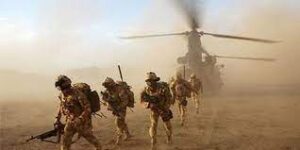
Diverse military operations
In military contexts, war can be seen as the type of operation in which every soldier and officer must be prepared to fight. Wars can be defined as defeating and eliminating the enemy’s forces as well as occupation of territory. However, as technology evolves, wars change and adapt. There are other common operations in military contexts, which decide for example what kind of ROE (Rules of Engagement) that should be followed. Many armed forces in Europe participate in United Nations (Module 1) and NATO led operations and must thereby have read and understood what is required in certain events.
The Rules of Engagement (ROE) are influenced by the operational, legal, and political spectrum, and should adhere to domestic as well as international law. Depending on the context, the ROE can differ depending on whether in times of peace or war. In addition, the ROE can regulate how much force and what kind of weaponry systems are allowed, and in which contexts force can and should be used (reactive or offensive).
To determine which procedure should be followed in a certain operation or area of operations (AO), it is important to decide the purpose of each operation. Military operations can be divided into the four groups described below.
- Offensive – used mainly during times of war in order to change the course of events, deter the adversary. Very often these include violence and force.
- Defensive operations – used to prevent casualties while preparing a future offensive operation.
- Stability operations – these operations cannot be conducted during active combat, but are conducted before and after combat.
- Support operations – provide reinforcement to local authorities, both foreign and domestic. Many peacekeeping operations (UN) can be seen as support operations.
| Combined arms – when different combat arms are integrated to achieve mutually complementary effects, where one supports the other, or both support each other. An example is when the artillery and mechanized infantry work together to achieve tactical aims. |
| Joint operations – when multiple service branches of the a country’s armed forces work together on the operational level (e.g. air and navy).
|
| Combined operations – when the military components of several nations work jointly. |
Discussion
- Which type of operation is the most vital/common in your nation’s armed forces? Has this changed over the years?
- Can you think of a recent event/scenario for each type of operation? (Can you think of examples from your own experiences?)
Battle orders
In offensive, and sometimes defensive, operations, armed forces will advance to seize territory. Advancing can be done in
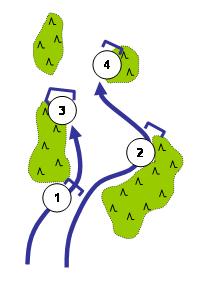
different ways, and below you will find four tactical examples for advancing and retreating.
Leapfrogging – dividing an attacking force into at least two parts. Team A suppresses the enemy by firing on the target while Team B changes positions. A signal is given and the teams switch roles.
Fire and maneuver/bounding over watch – alternating movement of coordinated units similar to leapfrogging however, without bypassing the other group. This include three phases: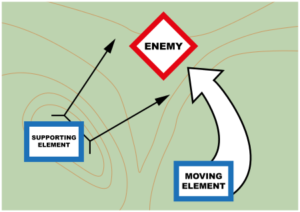 suppression, advance and assault.
Marching/walking fire – units advance while firing their weapons without stopping in order to pin down enemy defenders.
Left/Right/Center peel – a sloped or diagonal retreat from the enemy in which smaller groups of a much larger force withdraw. The smaller group forms a column facing into the enemy’s midst and while using suppressing fire to delay the enemy, the first soldier then moves behind the column towards a side and then continues to fire.
Discuss
What other tactics for advancing are you familiar with?
Complete the quiz
NATO and its tasks 
The North Atlantic Treaty Organization (NATO) was founded in 1949, and consists today of 28 European countries and 2 North American countries (2021). NATO protects the people and territory of its members and acts around the principle of collective defense, meaning that if one nation is attacked, then all NATO allies are attacked. NATO is a crisis management organization, which also promotes stability all over the world, for example by fighting terrorism. NATO is further engaged in many ground, air, naval missions, and also conducts training missions and disaster relief.
NATO’s essential and enduring purpose is to safeguard the freedom and security of all members by political and military means. Deterrence is a core element of NATO’s strategy which is supported by nuclear, conventional, and missile defense capabilities, with military and civil resources.
In 2021, NATO has 5 current operations which include air policing, securing maritime areas, securing ground areas, and training missions.
Discuss
What is the difference between deterrence and defense? Do you think that one is more important than the other in certain contemporary events/operations?
Read the article about NATO’s relations with Russia and then answer the questions below.
Article NATO’s relations with Russia
Questions
- Describe the nature of NATO’s relations with Russia before and after 2014.
- Why has practical cooperation been suspended?
- What are the Allies’ concerns regarding Russia?
- According to the article, does NATO wish to have a dialogue with Russia?