Curriculum
Module 1 Peacekeeping
Unit 1. UN Peacekeeping
0/7
Unit 2. History of peacekeeping
0/7
Unit 3. Types of Peace operations
0/8
-
1.3.1. Types of Peace Operations: Peace Support, Conflict Prevention, Peacemaking, Peace Enforcement, Peacekeeping, Peace Building
 Preview
-
1.3.2. Vocabulary in context
Preview
-
1.3.3. Defining the Concept of Peace and Trends in Global Peacefulness

-
1.3.4. Listening: UN Successful and Unsuccessful Missions
-
1.3.5. Military Incidents Reports in the Media: Writing a Press Release
Preview
-
1.3.6. Meet the Expert: Press Conference Briefing (video)
-
1.3.7. Writing a Paragraph

-
1.3.8. Speaking: Debate
Preview
Unit 4. Civil-Military Cooperation In Peace Operations
0/8
Unit 5. Tactical communication in Peace operations
0/6
Final Vocabulary Check
0/1
1.3.1. Types of Peace Operations: Peace Support, Conflict Prevention, Peacemaking, Peace Enforcement, Peacekeeping, Peace Building
1.3.1.1. Watch the video about peacekeeping, peacemaking and peacebuilding and answer the following questions:
- What colour codes are used for peacekeeping, peacemaking and peacebuilding?
- What does peacekeeping mean?
- Why is red colour used for PK?
- What are the opposing parties involved in during peacemaking?
- In global politics, who engages the opposing parties in discussions during peacemaking?
- What happens during peacebuilding
- What is the key word in peacebuilding?
1.3.1.2. Read the text from Allied Joint Publication (AJP)-3.4.1(A) Allied Joint Doctrine for Military Contribution to Peace Support and study the new words. Allied Joint Publication (AJP)-3.4.1(A) Allied Joint Doctrine for Military Contribution to Peace Support provides guidance for commanders when planning for and conducting peace support. NATO’s North Atlantic Council (NAC) may decide to intervene in crises beyond NATO borders to help strengthen or restore peace and security. The decision to employ NATO forces is likely to be part of a wider response from the international community that will also include civilian governmental and non-governmental organisations. Peace support can take place in the context of both interstate and intrastate conflict. 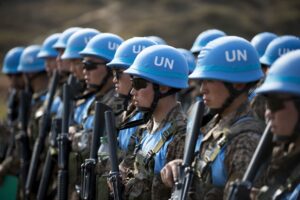 Peace support: Efforts conducted impartially to restore or maintain peace. Peace support (PS) efforts can include conflict prevention, peacemaking, peace enforcement, peacekeeping and peacebuilding. Peace support includes a series of efforts that support international peace and security. Figure 1 provides a basic conceptual framework to visualise when these types of efforts take place in and around conflict.
 Conflict Prevention: A peace support effort to identify and monitor the potential causes of conflict, and take timely action to prevent the occurrence, escalation, or resumption of hostilities. The purpose of conflict prevention is to keep interstate and intrastate disputes from escalating into armed conflict. It aims to prevent imminent conflict. Specific military tasks could include the provision of strategic early warning systems and analytical support to help identify states which are most at risk of entering into conflict, or the rapid projection of Allied forces to prevent an escalation of hostilities. Peacemaking: A peace support effort conducted after the initiation of a conflict to secure a ceasefire or peaceful settlement with primarily diplomatic action supported, when necessary, by direct or indirect use of military assets. Peacemaking (PM) involves primarily diplomatic-led activities aimed at establishing a negotiated agreement between major conflicting parties, such as a ceasefire or peace agreement. PM is conducted after a conflict has started. Peacemakers may represent an international organisation such as the United Nations (UN), a state, group of states or a regional organisation. Military forces are able to support the peacemaking process through the provision of military advice to other actors and the threat and the use of coercive force to deter major conflicting parties from continuing to pursue conflict. Peace Enforcement: A peace support effort designed to end hostilities through the application of a range of coercive measures, including the use of military force. It is likely to be conducted without the strategic consent of some, if not all, of the major conflicting parties. The purpose of peace enforcement (PE) is to restore peace and security in situations where, for example, the UN Security Council has authorised coercive action on the basis of the existence of a threat to the peace, breach of the peace or act of aggression. Peace enforcement will require UN Security Council authorisation in accordance with Chapter VII of the UN Charter because it is conducted without the consent of some of the major conflicting parties in the conflict. In such instances, the UN can authorise a third party — a regional security actor, such as NATO, or a coalition of states — to implement a PE mandate. Peace enforcement operations may require a wide range of military capabilities to coerce major conflicting parties to negotiate and end to hostilities. The peace support force (PSF) should be prepared to use force to physically separate the major conflicting parties or to stop atrocities. The PSF should also expect to suffer casualties. The use of military force in PE does not resolve the causes of conflict, it can only stop hostilities. Making further progress and sustaining a peace is often the role of peacekeepers. Peacekeeping: A peace support effort designed to assist the implementation of a ceasefire or peace settlement and to help lay the foundations for sustainable peace. It is conducted with the strategic consent of all major conflicting parties. Peacekeeping (PK) is conducted under the authority of Chapter VI of the UN Charter, and is based on the strategic consent of the major conflicting parties following a peace settlement or ceasefire. The purpose of PK to prevent the reappearance of conflict, mitigate humanitarian crises and help to develop state authority where state capacity and legitimacy is weak. The PSF should be prepared to use force to implement the mandate. Peacekeeping can be conducted by the UN or a regional organisation, and is likely to involve a mixture of military, police and civilian actors. Peacekeeping is multi-dimensional in nature. It is used as part of a broader international response to provide a safe and secure environment and assist in implementing agreements made between conflicting parties. Some peacebuilding activities may be carried out by military and civilian peacekeepers, in part, to build confidence among the local population and also between the conflicting parties. The overlap between peacekeeping and peacebuilding activities highlights the complex nature of contemporary PS.
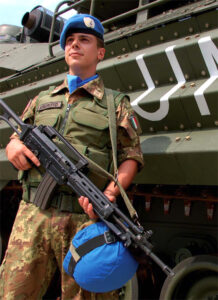 Peacebuilding: A peace support effort designed to reduce the risk of returning to conflict by addressing the underlying causes of conflict and the longer-term needs of the people. It requires a commitment to a long-term process and may run together with other types of peace support efforts. Peacebuilding (PB) should not be viewed in isolation since its activities often overlap with other efforts such as conflict prevention and peacekeeping. PB strategies should be adapted to the specific needs of the country. Peacebuilding includes mechanisms to identify and support structures that will consolidate peace and support long-term reconstruction.
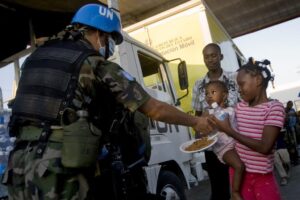 There are also operations organised in the event of disasters or pressing humanitarian crises.Their definitions are in the NATO Glossary of Terms and Definitions AAP-6: Humanitarian Assistance: As part of an operation, the use of available military resources to assist or complement the efforts of responsible civil actors in the operational area or specialised civil humanitarian organisations in fulfilling their primary responsibility to reduce human suffering. Humanitarian Operation: An operation specifically organised to reduce human suffering in an area where the civil actors are unable or unwilling adequately to support a population.
Target vocabulary
- intervene /ˌɪn.təˈviːn/ v. to intentionally become involved in a difficult situation in order to improve it or prevent it from getting worse
- interstate /ˌɪn.təˈsteɪt/ adj. involving two or more states
- intrastate /ˈɪntrəsteɪt/ adj. within one state
- resumption /rɪˈzʌmp.ʃən/ n. the start of something again after it has stopped
- imminent /ˈɪmɪ.nənt/ adj. about to happen very soon
- projection /prəˈdʒek.ʃən/ n. (power) projection is the ability to conduct military operations at long distances from bases of operations
- coercive /kəʊˈɜːsiv/ adj. relating to or using force or threats
- deter /dɪˈtɜːr/ v. to prevent or discourage from acting
- breach /briːtʃ/ n. an act of breaking a law, promise, agreement, or relationship
- atrocity /əˈtrɒs.əti/ n. an extremely cruel, violent, or shocking act
- mitigate /ˈmɪtɪ.ɡeɪt/ v. to make something less harmful, unpleasant, or bad
1.3.1.3. Answer the questions on the reading text in 3.1.1.
- Who takes the decision to employ NATO forces beyond NATO borders?
- What can Peace support (PS) efforts include?
- Which type of peace support is aimed at taking timely action to prevent a conflict?
- Which type of peace support is conducted after the consent of all major conflicting parties?
- Which type of peace support effort supports long-term needs of the people and long-term reconstruction?
- Which type of peace support involves primarily diplomacy?
- Which type of peace support requires UN Security Council authorization?
- Which type of peace support typically uses military force?
- When is peace support initiated in order to stop atrocities?
- Which type of peace support follows after a peace settlement or ceasefire?
- Which peace support activities can be conducted simultaneously?
- Which operations are organised when disasters or humanitarian crises happen?
- Which process do military forces support with military advice to other actors?
- When are strategic early warning systems employed?
NB! The answers are in the attached file.
Lesson Materials
