
Module 2 Counter-Terrorism


- Description
- Curriculum
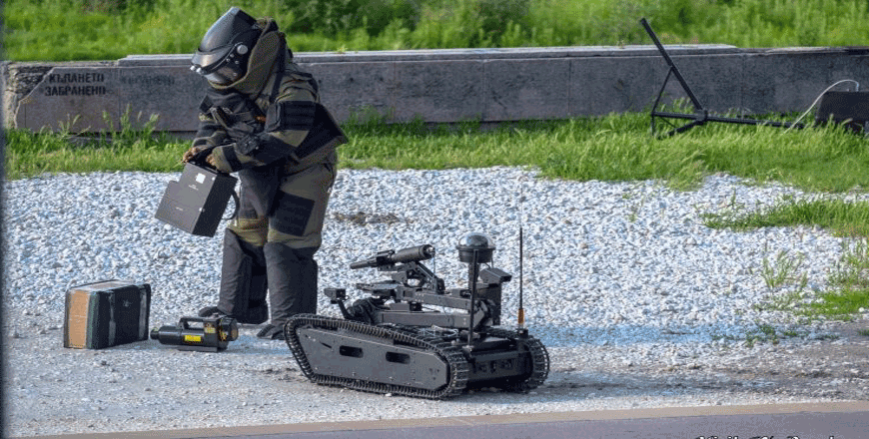
Module 2 provides learners with focused knowledge and functional skills in English for specific purposes needed to understand and use professional English terminology and concepts related to terrorism and counter-terrorism. The module has been designed after consultations with military counter-terrorism experts from Rakovski National Defence College and the Bulgarian Armed Forces. We are grateful for their support in the module development providing us with practical directions, precious feedback, and numerous materials which we have utilized into the module content. Course instructors and students from partner institutions provided feedback and support during the moderation stages of the module design. The topics in the module have been selected with regard to developing professional vocabulary usage and communication skills of security professionals in specialized English in order to successfully operate in specialized multinational environments. A list of the most widely used terrorism and counter-terrorism terms has been compiled for students’ convenience. This curriculum is composed of open-source materials, and therefore does not operate with classified information. The module’s content is organized in five Units of thematic topics, each subdivided into two methodological blocks: one of teacher assisted class work on terminology acquisition and practice, grammar review, speaking and writing, and one of self-study practice on integrating language competences and skills. The five unit topics are named as follows:
- TERRORISM OVERVIEW
- HISTORICAL OUTLINE
- COMBATTING TERRORISM
- TERRORISM PREVENTION
- FUTURE THREATS

-
1
 2.1.1. Defining Terrorism
-
2
2.1.1.1. Different Types of Terrorism
-
3
 2.1.2. Reading Comprehension
-
4
2.1.2.1. Vocabulary Study: synonyms and definitions
-
5
2.1.2.2. Vocabulary Study: Pronunciation
-
6
2.1.3. Understanding and Describing Graphs
-
7
2.1.4. Grammar Check: Language of Graphs
-
8
2.1.5. Graph Description Structure. Speaking
-
9
2.1.6. Writing: Describing a Graph
-
10
2.2.1. History of Terrorism
-
11
2.2.2. Tokyo Subway Sarin Attack
-
12
2.2.3. Grammar Check: Active and Passive Voice
-
13
2.2.4. Listening: News Reports. Notable terrorist acts
-
14
2.2.4.1. Meet the Expert: A Story of Choice
-
15
2.2.5. Grammar check: Past Conditionals
-
16
2.2.6. Speaking: Talking about hypothetical situations in the past
-
17
2.3.1. Terrorist Actions and Tactics
-
18
2.3.1.1. Reading Comprehension
-
19
2.3.1.2. Target Vocabulary in context.
-
20
2.3.2. Countering Terrorism
-
21
2.3.3.1. Watch: video clip Part 1
-
22
2.3.3.2. Watch: video clip Part 2
-
23
2.3.3.3. Watch: video clip Part 3
-
24
2.3.4. Grammar Check: Word Order
-
25
2.3.4.1. Grammar Check: Asking questions
-
26
2.3.5. Integrating skills: Improvised Explosive Devices
-
27
2.3.6. Watch and Write: Disarming an Improvised Explosive Device (IED)
-
28
2.4.1. Preventing Radicalisation
-
29
2.4.2.1. Understanding Long Sentences: Women Terrorist Radicalization
-
30
 2.4.2.2. Video: Women Radicalization
-
31
2.4.2.3. Group Discussion
-
32
2.4.3.1. Listening: Car Ramming part 1
-
33
2.4.3.2. Listening: Car Ramming part 2
-
34
2.4.3.3. Mitigation Traffic Obstacles
-
35
2.4.4. Grammar Check: Imperative Sentences. Modals of Obligation
-
36
2.4.5. Public Awareness
-
37
2.4.6. A Game
-
38
2.5.1. What Terrorism Will Look Like in the Near Future
-
39
2.5.2. Terrorist Threats In Europe: A Current Picture
-
40
2.5.3. Listening: Forecasting Terrorism
-
41
2.5.4. Grammar Check: Understanding Text Components
-
42
2.5.5. Meet The Expert: Cybercrime
-
43
 2.5.6. Writing: A Film Review (Click on All Requirements)


